Automatic mutual TLS
A rotating spiffe SSL bundle for Tomcat, Reactor Netty, RestClient and WebClient.
Open source · Apache 2.0 · Spring Boot 4.2 · Java 21
SPIFFE Spring Boot gives every service a cryptographic SPIFFE identity, mutual TLS, automatic certificate rotation and caller authorization. Add one dependency, deploy next to a SPIFFE agent, and you are done.
Works with SPIRE, IDIRA Secure Workload Access, and any SPIFFE Workload API.
<!-- pom.xml -->
<dependency>
  <groupId>org.spiffe-spring-boot</groupId>
  <artifactId>spiffe-spring-boot-starter</artifactId>
</dependency>

# application.yaml
server:
  ssl:
    bundle: spiffe        # mTLS with the workload's SVID
    client-auth: need
spiffe:
  mtls:
    server:
allowed-ids: spiffe://example.org/ns/shop/*One Maven or Gradle dependency. No keystores, no secrets, no extra code.
spiffeSet server.ssl.bundle=spiffe, and optionally list the SPIFFE IDs allowed to call you.
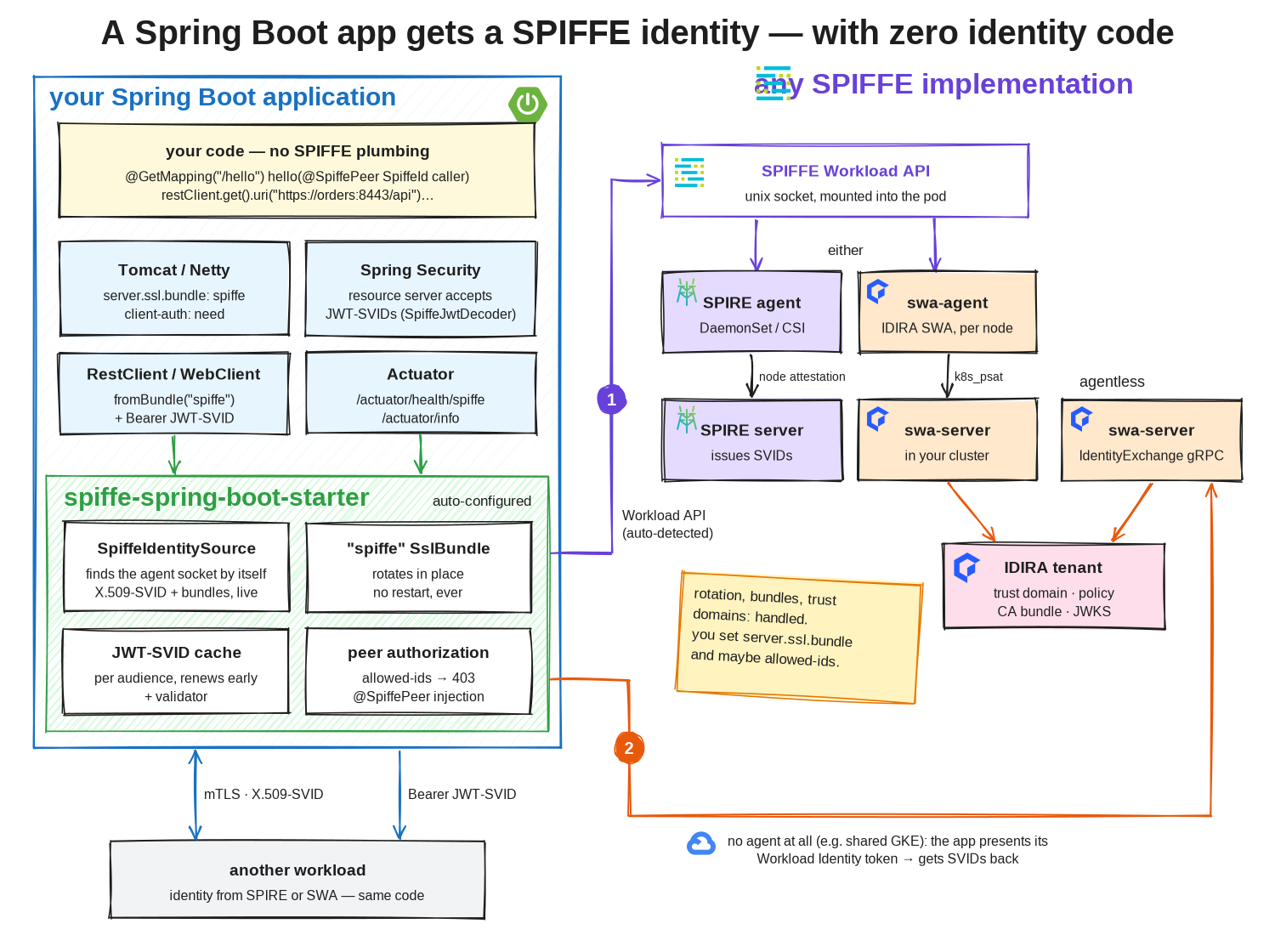
The starter finds the SPIRE or SWA agent socket by itself and keeps the identity rotated.
Each feature switches on only when you use it, through standard Spring Boot mechanisms.
A rotating spiffe SSL bundle for Tomcat, Reactor Netty, RestClient and WebClient.
New SVIDs from the agent apply live on servers and clients. Health turns DOWN if rotation ever stalls.
Rotation →An allow-list property, a @SpiffePeer controller argument, or Spring Security rules per endpoint.
Bearer tokens on outbound calls, validated on inbound ones through Spring Security's resource server.
JWT-SVIDs →SPIRE and IDIRA SWA agents over the Workload API, or IDIRA SWA with no node agent on shared GKE.
Backends →A spiffe health indicator and info contributor show the identity, its source and its validity.
The agent attests your workload and streams its identity. The starter turns it into Spring Boot configuration.
@GetMapping("/hello")
String hello(@SpiffePeer SpiffeId caller) {
    return "Hello, " + caller;
}RestClient orders = builder
.baseUrl("https://orders:8443")
.apply(ssl.fromBundle("spiffe"))
.build();Go from plain HTTP to mutual TLS with SPIFFE identities in a few minutes.